

In the last post we discussed risk aversion. One of the pitfalls of being too risk averse is lost opportunity cost.
In New Product Development Project Managers constantly balance time to market with product quality, resource management, project costs & a host of other competing factors.
In an effort to develop the perfect product with maximum process capability and meeting 100% customer satisfaction the real cost of lost opportunity is often missed.
Consider a product which on release will generate, on average, $100,000 profit a month for 12 months. If the product release is delayed by 1 month the lost opportunity cost can be estimated as $100,000. What should be emphasised is that this amount will NEVER be recovered. If the product lifecycle is estimated as being 12 months depending on the competition then releasing the product 1 month late reduces the lifecycle to 11 months.
If that lost $100,000 was invested at a compound rate of 5% per year over ten years it would be worth $163,000 !
So here are some tips to minimize lost opportunity cost:-
1) Invest in the project at the front end, providing ample resource and support.
2) Fix the product spec before the end of the design phase.
3) 100% perfection is great but 95% is normally good enough for most customers.
4) Make it easy for engineers by setting SMART (Specific, Measurable, Aggressive, Realistic, Timely) targets.
5) Publicise Project Milestone targets.
6) Communicate Lost Opportunity Costs.



; Keep up to date by becoming a facebook
fan

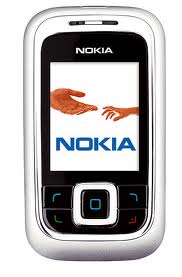 The recent internal memo “leaked” from Nokia & published on technology website Endgadget.com demonstrates the need for any corporation, but particularly those in the Technology arena, to have a continuous stream of
  Most people involved in


 Henry Ford once commented that if he’d asked his customers what they wanted they would have replied “Give me a faster horse”.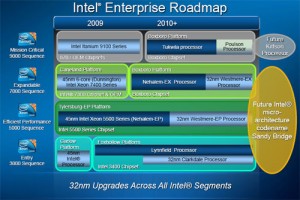
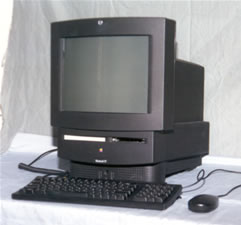 The Mac TV was released in 1993 and was Apple’s first attempt to integrate the functionality of a P.C with a cable ready T.V. Unforthunately it’s slow bus speed of 16 MHz made for a slow P.C compared to it’s rivals and a very expensive T.V at over $2000. Needless to say it flopped and only 10k were produced.
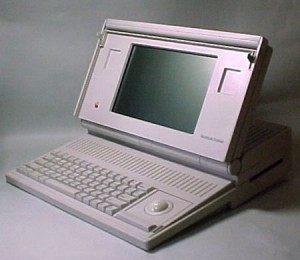 Apple’s first attempt at a portable computer was the Macintosh portable. Released in 1989 it was way ahead of its time, and so it should have been at a whopping $6500. It weighed in at a hefty 7.2kg and had an active matrix LCD screen which was fantastic but the major contributor to its cost.
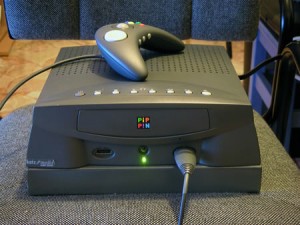 In 1995 Apple licensed its PIPPIN technology to Bandai to make a PC based game consol. The only problem was the competition, SEGA, SONY, Nintendo and PC based systems were already dominating the market. Only 42,000 PIPPIN units sold and it was withdrawn from the market.
 If you need a
  Whilst the football may not have lived up to the hype so far we have still seen a couple of excellent team performances. So what is it that makes for a
  Recent data from the IMF supports the view that China and Africa are becoming increasingly entwined as trading partners as China exploits the vast mineral and material wealth of the African continent in return for Capital Investment, machinery and technological know how.
 Whilst the U.S and Europe have been mired in recession the Chinese rescue package has ensured that growth in that country continues at a rate of around 10%.