
 The planes are flying again over Europe as the restrictions imposed due to the Icelandic volcanic ash cloud have been lifted. But are the scenes experienced over the last few days a bleak glimpse into our collective futures ?
It is commonly acknowledged that oil reserves will not last forever but maybe less well known that the period of peak oil production is upon us and in the near future demand will begin to exceed supply. So what are the possible consequences:-
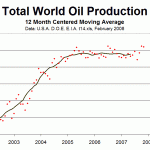 1) Oil is like any other commodity and as demand exceeds supply price will increase. This was seen before the financial crash of 2008 when Oil peaked at $147 per barrell. It is current around $82 per barrell.
2) GDP growth is directly dependent on oil supply. China is currently growing at around 10% per annum – this cannot continue.
3) There is no readily available alternative. Biofuels represent a tiny percentage of total fuel volumes and use up valuable land resource which could be used to grow food.
4) We will experience increasing cost of food and other essentials.
5) Air travel will become the preserve of the rich. This can already be seen in the UK with vastly fewer people taking foreign holidays following the financial crash.
6) Our world will shrink; the global village we have experienced since the 1960’s will shrink as travel costs reduce our ability to roam.
7) There will probably be more conflict on a global scale as States compete for scarce resources.
This all sounds like bad news but there will be positive outcomes:-
1) Reduced consumption of Oil will reduce the amount of carbon generation and lessen the risk of global warming.
2) The crisis will force us to develop alternate energy strategies.
3) Being less dependent on “the black stuff” will enable us to take independent geo-political decisions less hindered by our current needs.
4) We will be more concious about re-use and less wasteful of resources.
We live in interesting times.


 I don’t know about you but I love BBC’s Masterchef, not just for the food and the cooking skills but the lessons it has for
  Is the current industrial strife at British Airways indicative of a poorly managed
  I was recently asked “how do you deal with negative customer feedback ?”
 This is one of the most common questions in the world of
  Innovation is the name of the game; especially in the competitive world of consumer electronics. The only way to remain competitive is to continue to produce new, relevant products which the customer wants.
 There has been lots of recent talk from politicians, particularly The Conservative Party, about rejuvinating British Industry. Indeed James Dyson, the renowned inventor of the bagless vacuum cleaner which bears his name, recently issued his
  According to the PMI definition :- ‘Project Manager – The person assigned by the performing organization to achieve the project objective’
 This incident highlights the ethical dilemmas posed in Subcontracting. How do we deal with massive corporations which often dwarf our own ? How do we balance the need to reduce manufacturing cost with the need to deal with undemocratic regimes with questionable human rights records ?