
1o ways to invigorate teamworking #pmot #in

teamworkMost people involved in New Product Development agree that best results are obtained when people work effectively in teams so here are 10 guaranteed ways to improve teamworking:-

1) Locate the team together in the same room. – If people sit together they work together. It is essential that the primary form of communication is face to face. There should be some allowance for privacy but any cubicle walls should be below head level.

2) Locate the Project Manager in the same room – As the Project Manager there may be a tendency to remain distant or aloof from the team. This is counterproductive and wrong. The Project Manager should be located in the same room as the team. If She has her own office the door should be left open to allow ready access. If She sits with the team there should be a private office available for personal discussion.

3) Hold regular team meetings – although there may be some resistance to this (too much work etc) it is essential that the team meet at least once a week to discuss project status.

4) Issue meeting minutes – It helps communication if everyone knows exactly what is expected of them following the team meeting. The minutes also act as a good crib for next weeks meeting.

5) Promote a democratic culture – environments where people feel free to speak their minds openly and honestly lead to faster problem solving and decision making.

6) Promote team activities – 5 a side football or similar activities are great if everyone is  fit and active but be careful to choose something EVERYONE can take part in otherwise you will alienate some team members and defeat the purpose. I have always found bowling to be a great choice which just about everyone can do.

7) Eliminate the Blame Culture – resist every opportunity to blame others and take responsibility for your own decisions. Blame Cultures are endemic in some organizations and will take time to be eradicated but the changes in performance will be immeasurable.

8) Listen twice as much as you talk – we all know the old saying about empty vessels making the most noise and no where is this more true than in Project Management.  Try really listening to people and see their reaction.

9) Put the Structure in place – whether its based on PRINCE2, Project Management Institutes PMBOK or some alternative combination, Teams are more effective when they no what the rules are.

10) Keep a sense of humour – as the Project Manager nothing upsets or disorients the Team more than a panicky Manager. Keep a sense of perspective, enjoy the fun bits and lead by example.

chris@projectsguru.co.uk

www.projectsguru.co.uk

Follow projectsguru on Twitter


View Chris Robinson's profile on LinkedIn


PGBANNERSTATIC

10 tips for faster leaner new product development #in #pmot #lean

new-product-development

Bringing New Products to Market faster & more efficiently is even more critical as product life-cycles shrink so here are 10 tips for faster, leaner New Product Development:-

1) Nail the spec early – the sooner the product spec is finalised the smoother & faster the development will be. Less time & effort will be wasted debating the minutiae if the spec is closed early.

2) 5s the area – Apply the Lean principles of 5s (see earlier post) to remove unnecessary distraction and promote “clear thoughts”

3) Promote re-use in Design – to reduce design effort and make best use of proven and qualified technology.

4) Parallel Planning & Design – Design is normally the longest phase in New Product Development so why wait until the end of Planning to start Design. Start Design in parallel and adapt the plan when more is known about the length of the design phase.

5) Arrange Regular Reviews – during the Design phase and break the task into smaller “chunks”. Design is one of those tasks which has a tendency to expand to fill the time allowed for it.

6) Structure the Innovation process – ensure that Innovation board reviews are scheduled well in advance and board members have suitably qualified deputies so that stage gate reviews suffer no delays due to the absence of key personnel. The Innovation process should become Institutionalized.

7) Dedicated multifunctional Teams – are more effective than matrix teams  If resource allows.

8) Design for Manufacture – manufacturing & production engineers need to be involved in the product development process to ensure a smooth transition from development to manufacture.

9) Minimize interruptions & noise – in the product development area.

10) Promote a democratic involving Management style – to increase free discussion and mutual respect.

chris@projectsguru.co.uk

www.projectsguru.co.uk

Follow projectsguru on Twitter


View Chris Robinson's profile on LinkedIn

PGBANNERSTATIC

The Jaguar roars…..

Jaguar XF - a great example of new product development success

Jaguar XF - a great example of new product development success

This weekend jaguar Land Rover announced that it had reversed its threat to close one of its U.K plants and, even better, said that it would create thousands of new jobs including 1500 at it’s plant at Halewood on Merseyside.

Barely 2 years after fears that Jaguar Land Rover might fold Q2 profits of £233 million have boosted confidence in the future of the luxury car market.

A large part of this success is due to innovative new product development and in particular the success of the new XF range.

According to data from the European Automobile Manufacturers’ Association (ACEA), the number of Jaguar’s being registered in Western Europe in April rose 70.3 per cent year-on-year – way above any other volume manufacturer.
Jaguar have addressed one of the main concerns amongst luxury car consumers – the trade off between performance and fuel consumption. The XF does a staggering 0 – 60 m.p.h in 5.3 seconds and still manages a meagre 47 m.p.g.
Jaguar have demonstrated how investment in innovation and new product development can bring success even in the most difficult of economic climates.

Follow projectsguru on Twitter

Ed – tell us what you will do for manufacturing ?

Ed Miliband

Now that Ed Miliband has being elected Leader of the Labour Party perhaps we should expect some real policies to revive the U.K manufacturing industry.  Ed has mentioned “broadening the industrial base” but there is precious little on the official Labour Party website to illustrate what this means.

The last Labour Government presided over the biggest decline in manufacturing industry EVER ! from 28% GDP in 1996 to a pathetic 10% in 2010.

“So what ?” you may ask.

Well, manufacturing is important for the following reasons:-

1) Jobs tend to be higher paid than those in administrative rolls.

2) Every job in manufacturing creates 10 others in the Supply Chain.

3) Products manufactured in the U.K generate important foreign income and reduce the trade deficit.

4) Making things generates a sense of self worth and pride.

5) Manufacturing provides valuable Tax revenue.

If we seriously want to reduce the current account deficit and claw our way out of recession we need some real policies to revive the manufacturing sector based on new product development and innovation.

So Ed – tell us what you will do for manufacturing ?

chris@projectsguru.co.uk

www.projectsguru.co.uk

Follow projectsguru on Twitter

What the heck is 5s ?

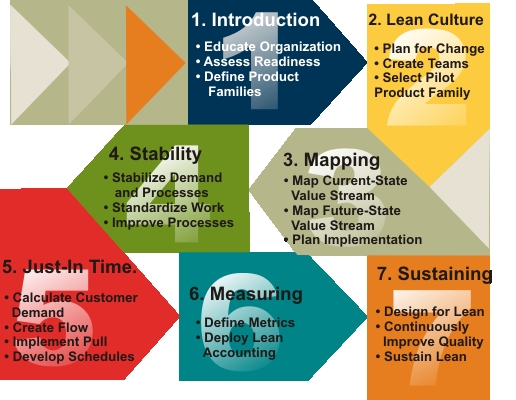
The Lean Process

The Lean Process

A key part of adopting a LEAN strategy is the implementation of 5s.

5s refers to the following Japanese words and their meaning in relation to LEAN.

Seiri (Sorting)

In order to minimize confusion and increase efficiency anything not in immediate use should be stored out of the way in designated areas.

Seiton (Straightening)

Every tool should be in its place and in line with the workflow.

Seiso (Cleaning)

The workplace should be cleaned regularly and periodically and everything put back in its place.

Seiketsu (Standardization)

Work practices should be consistent and standadized and everyone must know their duties and responsibilities.

Shitsuke (Maintenance)

Enforce the previous 4s whilst reviewing and modifying them as required.

chris@projectsguru.co.uk
Follow projectsguru on Twitter

www.projectsguru.co.uk

Adding ideas to the Roadmap……

Bizplan03

Now you need to add those ideas generated from your Brainstorming session to your Product Roadmap. We suggest the following process:-

1) The first key step is to match the New Product Ideas to the Technology Roadmap. If the Idea does not match up to the Technology available then the capability to bring it to market will be extremely limited and the cost of developing the appropriate technology will have to be taken into consideration.

2) The Business Case should be thoroughly reviewed in terms of potential Market, Unit Cost, Selling Price, Volume, Resources etc

3) Products generating the greatest IRR (Internal Rate of Return) should be given priority.

4) Only when the above process has been followed and New Product Ideas meet the required Company criteria should the New Product Development commence.

By pursuing a New Product Development process which follows a defined Product Roadmapping process you will ensure that New Product Developments are resourced effectively and time to market is minimized which brings maximum returns.

chris@projectsguru.co.uk

www.projectsguru.co.uk

Follow projectsguru on Twitter

“Give me a faster horse”

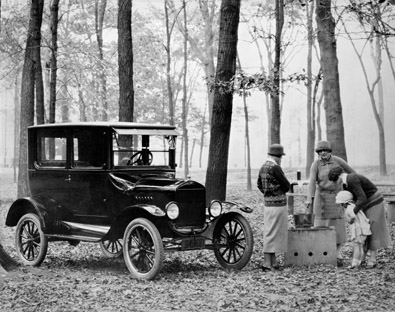
modelTHenry Ford once commented that if he’d asked his customers what they wanted they would have replied “Give me a faster horse”.


Sometimes in New Product Development we have to take a Quantum leap in imagination so that we can develop products which no one else has imagined.

“Brainstorming” is one techniques to help that process:-

1) Form a team of maximum 10 people drawn from all levels of the organization.

2) The “Chairperson” should be mid level with no obvious authority.

3) Provide some drinks and snacks to create a relaxed atmosphere.

4) Go round the table asking each one in turn what products they think the Company should be developing.

5) Don’t reject anything at this stage.

6) Don’t criticize anyone else’s contribution.

7) Get someone to list all the contributions on a whiteboard.

8 ) When all contributions are exhausted arrange them into different categories.

9) Vote on the top 5.

In the next post we will explore how to take these ideas forward.

chris@projectsguru.co.uk

www.projectsguru.co.uk.
Follow projectsguru on Twitter

“If you don’t know where your going…

product roadmap

product roadmap

any road will take you there.” – Lewis Carroll

To increase the success ratio in New Product Development it is essential that your company has its own New Product Development Roadmap.

This Roadmap highlights the Products your organization intends to develop in the coming years.  These product developments should be based on sound market intelligence, garnered from current customers and taking into account market developments and competitor analysis.

The New Product Roadmap doesn’t just identify market opportunities. It also takes into account the Technologies, Resources, Finances, Production Capacity etc etc so that the whole Organization knows exactly what needs to be put in place so that that the New Products are launched successfully.

The New Product Roadmap needs to be approved at the very top of the Organization. It is a “living document” which should be reviewed on a regular basis and updated as required.

The adoption of a New Product Roadmap clarifies the direction the organization is headed in and ensures that everyone is “singing from the same Hymn sheet”

“If you don’t know where you’re headed any road will take you there”

chris@projectsguru.co.uk

www.projectsguru.co.uk

Follow projectsguru on Twitter

Failure breeds success………

Most would agree that Apple is one of the most innovative and successful companies involved in new product development. However even they have had their fair share of Bloopers, so lets take a look at some of them:-

MacTV The Mac TV was released in 1993 and was Apple’s first attempt to integrate the functionality of a P.C with a cable ready T.V. Unforthunately it’s slow bus speed  of 16 MHz made for a slow P.C compared to it’s rivals and a very expensive T.V at over $2000. Needless to say it flopped and only 10k were produced.
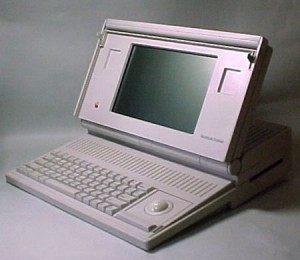
macintosh_portableApple’s first attempt at a portable computer was the Macintosh portable. Released in 1989 it was way ahead of its time, and so it should have been at a whopping $6500.  It weighed in at a hefty 7.2kg and had an active matrix LCD screen which was fantastic but the major contributor to its cost.

apple_pipinIn 1995 Apple licensed its PIPPIN technology to Bandai to make a PC based game consol. The only problem was the competition, SEGA, SONY, Nintendo and PC based systems were already dominating the market. Only 42,000 PIPPIN units sold and it was withdrawn from the market.

O.K, you get the picture. Even the most innovative companies have their fair share of commercial failures. Typically this may run as high as 8 failures for every 2 successes, following the well known Pareto rule.

Less successful companies will have an even higher failure rate and in many cases this will lead to their ultimate demise.

So how should an organization skew the playing field to ensure a higher success rate ?

That will be the subject of the next post.

Until then, just remember, failure breeds success.

chris@projectsguru.co.uk

www.projectsguru.co.uk

Follow projectsguru on Twitter

Don’t fear failure…..

jigsawWe are conditioned to fear failure. We must succeed at all costs. Throughout our schooling we are expected to pass our exams with flying colours and to fail is to be labelled as useless.

This fear of failure is stifling and killing our ability to innovate. Thankfully many individuals overcome this conditioning and realize that failure paves the road to success. The secret is to NEVER GIVE UP. To fail is perfectly natural and through failure we improve and succeed.

Any product innovation will fail many times but with an attitude of continuous improvement you will eventually succeed with a product which exceeds all expectations.

For inspiration about new product development success and persistence in the face of failure read the inspiring story of Charles Goodyear the pioneering inventor of vulcanized rubber.

Don’t fear failure – Strive for success.

chris@projectsguru.co.uk

www.projectsguru.co.uk

Follow projectsguru on Twitter