
The importance of bin on message #pmot #in

Obama2 Whatever the rights or wrongs of the killing of Osama Bin Laden the message delivered surrounding his dispatch was certainly confusing to say the least.

First he died in a vicious firefight, next he was unarmed.

He used his wife as a human shield, then it was her who leaped in front of him!

The Whitehouse staff watched every moment of the assault live, then…… oh no they didn’t, they only watched the first couple of minutes before transmission was lost ! etc etc etc etc

“Jeeeezzzzzz! can’t these guys get anything right? ” millions around the world screamed at their TV’s.

And this is just the kind of mixed messages we deliver to our exasperated customers every day of the week. First we promise delivery on a certain date, then we go back and revise it, then someone else tells them a different story, its hardly any wonder that customers get fed up and go elsewhere.

So here are some simple tips to make sure your organization is on message for your customers:-

1) Where possible have one direct contact per customer, if this is not feasible have one contact for engineering issues, another for commercial etc.

2) Before giving a customer a key milestone make sure the project plan is fully developed and includes some contingency to allow for risk.

3) If events transpire to affect a key customer milestone make sure every option is explored to pull back on track  before going back to the customer with the bad news.

4) If a major milestone is affected this should be communicated face to face.

5) Always give the customer a series of alternative options, so they can choose the best for them.

Keeping the customer on message is an essential part of managing customer relations and ensuring steady, repeat business.

chris@projectsguru.co.uk

www.projectsguru.co.uk

Follow projectsguru on Twitter

View Chris Robinson's profile on LinkedIn

; Keep up to date by becoming a  facebook
fan

project managers and business consultants

Bookmark and Share

Lost opportunity cost…..#pmot…#in

Bizplan03

In the last post we discussed risk aversion. One of the pitfalls of being too risk averse is lost opportunity cost.

In New Product Development Project Managers constantly balance time to market with product quality, resource management, project costs & a host of other competing factors.

In an effort to develop the perfect product with maximum process capability and meeting 100% customer satisfaction the real cost of lost opportunity is often missed.

Consider a product which on release will generate, on average,  $100,000 profit a month for 12 months. If the product release is delayed by 1 month the lost opportunity cost can be estimated as $100,000. What should be  emphasised is that this amount will NEVER be recovered. If the product lifecycle is estimated as being 12 months depending on the competition then releasing the product 1 month late reduces the lifecycle to 11 months.

If that lost $100,000 was invested at a compound rate of 5% per year over ten years it would be worth $163,000 !

So here are some tips to minimize lost opportunity cost:-

1) Invest in the project at the front end, providing ample resource and support.

2) Fix the product spec before the end of the design phase.

3) 100% perfection is great but 95% is normally good enough for most customers.

4) Make it easy for engineers by setting SMART (Specific, Measurable, Aggressive, Realistic, Timely) targets.

5) Publicise Project Milestone targets.

6) Communicate Lost Opportunity Costs.

chris@projectsguru.co.uk

www.projectsguru.co.uk

Follow projectsguru on Twitter


View Chris Robinson's profile on LinkedIn

; Keep up to date by becoming a  facebook
fan

project managers and business consultants

Bookmark and Share

Are we too risk averse…?….#pmot #in

riskmanagementThis week one of the busiest Motorways in England was closed for 3 days because of a fire in a scrap yard adjoining the motorway. In the ensuing debate questions were raised about the need to prevent such a thing happening again, including closing all potential threats in sites adjoining Motorways.

This was the FIRST TIME THIS HAD HAPPENED IN 30 YEARS !!!

It got me thinking about our attitude to risk.

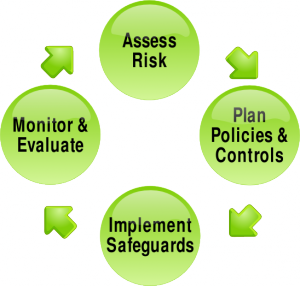
How much time do you spend in New Product Development assessing and mitigating against risk ?

How much delay is introduced in the project timeline for risk prevention ?

Perhaps we need to have a better balance between risk mitigation and opportunity enhancement.

What do you think ?

chris@projectsguru.co.uk

www.projectsguru.co.uk

Follow projectsguru on Twitter

View Chris Robinson's profile on LinkedIn

; Keep up to date by becoming a  facebook
fan

project managers and business consultants

Bookmark and Share

#Space…the final frontier….#pmot….

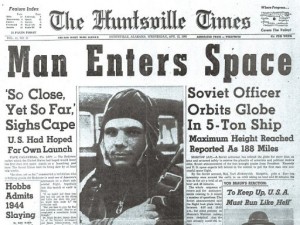
yuri5o years ago today Yuri Gagarin became the first man in space when he orbited the earth in his Vostok spacecraft, winning the cold war race and catapulting himself into the annals of history.

Consider for a few moments what we have achieved since then.

We have taken “one small step for a man, giant leap for mankind” when Neil Armstrong became the first man to walk on the moon in 1969.

Like Icarus we have sailed too close to the sun in Apollo 13 and survived through tremendous ingenuity and fortitude.

Through Hubble we have peered back through Space & Time to the very origins of the Universe.

Perhaps our greatest achievement was when cold war foes became friends and joined hands in the International Space Station 30 years after Gagarin’s first tentative flight.

chris@projectsguru.co.uk

www.projectsguru.co.uk

Follow projectsguru on Twitter

View Chris Robinson's profile on LinkedIn

; Keep up to date by becoming a  facebook
fan

project managers and business consultants

Bookmark and Share

Politically correct ? …..#pmot…..#in

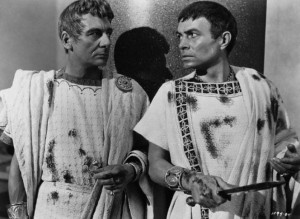
et tu Bruti

et tu Bruti

According to my Dictionary Politics is defined as “Social Relations involving intrigue to gain authority or power” so its not just Politicians who practice politics, in fact it is as old as human interactions.

Every organization has its own politics. Some are much more blatant than others but politics is present wherever humans interact.

Generally, the higher one goes in an Organization the more powerful the politics.

If you are a Project Manager & you hate office politics then you are probably in the wrong game.  Project Management involves a large degree of political manoeuvring and in order to get things done you have to ask people in certain ways which may involve putting your spin on the available information.

When you join a new organization spend the first couple of months observing the behaviour of your co-workers, call it awareness or paranoia it’s your best defence against being a victim rather than a victor.

chris@projectsguru.co.uk

www.projectsguru.co.uk

Follow projectsguru on Twitter

View Chris Robinson's profile on LinkedIn

; Keep up to date by becoming a  facebook
fan

project managers and business consultants

Bookmark and Share

Fix the system not the individual…#pmot…#in

systems-thinkingOn a recent business trip to Geneva I flew from Leeds Bradford Airport in the North of England. I checked through on time and headed for the gate to be met by a scene of organised chaos. The queue was very long and heaving with Schoolkids on exchange visits, holidaymakers and business people. At the very end of this long queue we were given a tray into which we had to load our laptops, keys, belts etc as part of the security screening process. This was undoubtedly the bottleneck and by the time I got through security to the Gate I was informed by an attendant that I may well have missed the flight. I was then subjected to admonishment, had I not heard the attendants calling people through for the Geneva flight – “No” , I hadn’t heard anything in melee – anyway to cut a long story short I caught my flight but not without a lot of hassle and stress.

Contrast this experience with the return journey – same plane, same loading, same mixture of people.

Here, at Geneva, the queuing system was completely different. Rather than joining  a long “snake” we joined the end of two queues where we were given a tray on a conveyor belt at the START of the queue. This gave us plenty time to put all our valuables into the tray before we reached the end of the queue and the X-ray machine. Consequenly there was no rush or panic, we all got through in plenty time & enjoyed a less stressful experience.

The difference was one of Systems Thinking. The system at Geneva was designed to speed the security process, eliminate bottlenecks and make thing easy for the customer. The system at Leeds-Bradford did the opposite.

If we employ Systems Thinking to our Business Processes, adopting the spirit of Kaizen, we will encourage the smooth flow of people and materials to aid maximum efficiency and process capability. If we ignore the system and blame the individual we will never achieve maximum efficiency & are doomed to fail.

chris@projectsguru.co.uk

www.projectsguru.co.uk

Follow projectsguru on Twitter

View Chris Robinson's profile on LinkedIn

; Keep up to date by becoming a  facebook
fan

project managers and business consultants

Bookmark and Share

Should have gone to Spec wavers..#pmot #in

product specHow many times have you worked on projects where the product spec is not defined?
This leads to all sorts of issues as the customer tweaks the product spec and the designer responds accordingly, trying to keep the customer happy but at the same time disappointing her because the timescale keeps getting extended to accommodate the changes.  A vicious circle develops leading to frustration on all sides & a perception of incompetence which can lead to loss of all important business.

This can be fixed by adopting the following practice:-

1)      A milestone MUST be put in the plan, somewhere in the design phase, for product spec sign off by both parties.

2)      It should be clearly communicated and understood that any changes following this milestone will be under change control, approved by Senior Management and will impact the timing plan & probably have a cost impact.

This practice is good for both customer & supplier. It forces the customer to clarify what they want and leaves the supplier with no excuse for not meeting planned deliverables once the spec is fixed.

chris@projectsguru.co.uk

www.projectsguru.co.uk

Follow projectsguru on Twitter

View Chris Robinson's profile on LinkedIn

; Keep up to date by becoming a  facebook
fan

project managers and business consultants

Bookmark and Share

“Dee eff emm eee aaay”…? #pmot #in

DFMEADFMEA or Design Failure Modes Effects Analysis is a Risk Management Tool which is widely used throughout the Automotive Industry.

DFMEA is a Team activity which is led by the Project Manager or Senior Design Engineer.

It involves using a set form & identifying the risks in the project.

Each Risk is called a Failure Mode. Each has an Effect. The Severity of this Effect is assigned a score where 10 is high impact & 1 low impact.

Each Failure Mode also has a Cause which is ranked according to its Occurrence or likelihood between 1 & 10.

Each Failure Mode also has a Current Control and its chance of detection is ranked 10 unlikely to 1 likely.

The product of Severity x Cause x Control gives us a Risk Priority Number or RPN which gives us a measure of the size of the problem and the urgency to address it.

Identifying a Recommended Action for each Failure Mode leads us to rescoring the Occurrence & Detection and subsequently reducing the RPN.

The key to success of DFMEA is not to get too hung up about the scores and to use it as intended, as a comparative tool for Risk Analysis.

chris@projectsguru.co.uk

www.projectsguru.co.uk

Follow projectsguru on Twitter

View Chris Robinson's profile on LinkedIn

; Keep up to date by becoming a  facebook
fan

project managers and business consultants

Bookmark and Share

The difference between price & cost…#in..#pmot

price & cost

How many times have you inherited a project and had major problems with a supplier who was selected because they were cheap !

This perception of “cheap” is normally based purely on price and takes absolutely no account of the total cost of ownership of the product or service.

Selecting suppliers purely on price is never a good idea.

Here are some great tips from Businesslink:-

What you should look for in a supplier

There are a number of key characteristics that you should look for when identifying and short listing possible suppliers. Good suppliers should be able to demonstrate that they can offer you the following benefits.

Quality and reliability

The quality of your supplies needs to be consistent – your customers associate poor quality with you, not your suppliers. Equally, if your supplier lets you down with a late delivery or faulty supplies, you may let your customer down.

Speed and flexibility

Being able to place frequent, small orders lets you avoid tying up too much working capital in stock. Flexible suppliers help you respond quickly to changing customer demands and sudden emergencies.

Value for money

The lowest price is not always the best value for money. If you want reliability and quality from your suppliers, you’ll have to decide how much you’re willing to pay for your supplies and the balance you want to strike between cost, reliability, quality and service.

Strong service and clear communication

You need your suppliers to deliver on time, or to be honest and give you plenty of warning if they can’t. The best suppliers will want to talk with you regularly to find out what needs you have now and how they can serve you better in the future.

Financial security

It’s always worth making sure your supplier has sufficiently strong cashflow to deliver what you want, when you need it. A credit check will help reassure you that they won’t go out of business when you need them most.

Always remember the difference between price & cost

chris@projectsguru.co.uk

www.projectsguru.co.uk

Follow projectsguru on Twitter

View Chris Robinson's profile on LinkedIn

; Keep up to date by becoming a  facebook
fan

project managers and business consultants

Bookmark and Share

So what’s the plan…….#pmot #in

project-planningAs a rough guide a Project Manager should put 70% effort into planning a project and 30% running it.

At first glance this statement may appear to be the wrong way round but experience shows that the planning phase of a project is by far the most critical one.

Here are some attributes of a well developed plan:-

* It should flow from start to finish.

* There should be a series of linked tasks from start to finish.

* Each task should have a named resource assigned to it.

* Everyone assigned to a task should have agreed and committed to the timescale.

* There should be a clearly identified Critical Path.

* The plan should be visible to key stakeholders in the organization.

* It should be reviewed and updated regularly.

Once all of the above has been fulfilled the management of the project becomes a relatively easy task.

If you need help planning your key project get in touch now

chris@projectsguru.co.uk

www.projectsguru.co.uk

Follow projectsguru on Twitter

View Chris Robinson's profile on LinkedIn

; Keep up to date by becoming a  facebook
fan

project managers and business consultants

Bookmark and Share